I first watched a movie long ago (and many times since) that truly touched my soul, as is often the case for viewers of many incredibly emotionally moving films out there. I am not unique – this particular movie has spoken to countless people around the globe. Several songs in it became instant successes practically overnight. People have come out of the woodwork to identify with various characters in this movie. And to talk…about Bruno. But we don’t talk nearly enough about Mirabel.
In Disney’s movie “Encanto”, the Madrigal family lives in a magical home that is kind of “alive”, actively protects them, and blesses the family members when they come of age. Through the power given to the family matriarch from a miracle candle that appeared while fleeing political upheaval in her home country, and with the aid of Casita (their magical home), each child and grandchild is endowed with a special extraordinary talent when they reach a certain age by way of a magical door that appears for them to open to their own little themed world. The town shows up to celebrate as each young person turns the doorknob and receives his or her unique talent. One has extraordinary hearing, another can shape shift, one can heal illnesses and injuries with food, another controls the weather with her moods, and one can see visions. There are more gifts, but you get the drift. Each one is special in their own way…except Mirabel. On her special day, Mirabel’s door melted away, never to be opened. Mirabel appears to never receive a special gift.
I listened to conversation after conversation about this movie as people most often identified strongly as feeling like Bruno, a misunderstood outcast in their family; or Louisa, the eldest child in one family branch who must carry the weight of the world on her shoulders. I listened to discussions of generational trauma and the burden of impossible expectations. I listened to people compare aspects of the movie to their Earthly families and their own healing journeys. And I wondered why no one was initially identifying with Mirabel, the seemingly unexceptional daughter who ultimately led the family to healing. Because, from the very beginning, Mirabel’s character and perspective made the most sense to me.
Without an incredible obvious gifting, Mirabel resides in the shadows of her extended family, each one uniquely talented in their own way. The family looks at Mirabel like a stain on their impeccable legacy, a bit of an embarrassment, since she apparently has nothing of worth to offer the family or community. Like everyone around me, I saw Mirabel as the only healthy family member in the story because she could see the brokenness and wanted to bring others to awareness and authenticity. Right? Even the plot summary circulated around on the Internet points to Mirabel as the hero of the story. But I overlooked some very important points, until about the third or fourth time I watched it.
• Mirabel isn’t the first character in the film to move forward in a healing journey and she isn’t the last. Many of the characters simultaneously begin individualized, almost parallel pathways toward healing. Her strong older sister, Louisa, first speaks up about the pain of carrying too much of the family’s burdens and the crushed weight of unreasonable expectations. It takes bravery to be that vulnerable in a family obsessed with keeping up appearances. Additionally, Louisa is the first one who points Mirabel in the correct direction of healing. Without Louisa’s advice, Mirabel would not have known where to start. Mirabel’s uncle, Bruno, sees a confusing portion of Mirabel’s future. Instead of speaking to the family assertively about what he saw, and his own inability to understand the meaning; he hides from the family unit to avoid the fallout he suspects he will receive, to preserve the facade of peace within the family, and in hopes of sparing Mirabel the pain of being misunderstood by the family. In actuality, Bruno’s abandonment only preserves his own fragile ego, multiplies the discord in the family unit, and leaves Mirabel as the misunderstood scapegoat in the Madrigal family. However, he is the second person to point Mirabel in the correct direction toward healing. Without Bruno’s guidance, Mirabel would not have known what to do. Mirabel’s other older sister, picture perfect Isabella, reveals to Mirabel that she resents that she has to play perfect because she feels pressure to do so at all times. Acknowledging deep stressors takes time and a growing awareness. Isabella’s personal revelation results in the creation of something totally new – and she immediately steps outside her meticulously cultivated perfect life to live her authentic self, regardless of the consequences.
• Now I’m going to say something super controversial: Mirabel isn’t healthy and she isn’t the hero. Mirabel starts out just as unhealthy as everyone else. The vision Bruno has about Mirabel has no definitive outcome – the future of whether her family falls apart or grows stronger together is left entirely up to Mirabel. But here is something I initially missed: Mirabel chooses unwisely at first – and then abandons her family, just like Bruno. She had set out to gain her family’s respect by being the hero who saves the miracle, a selfish pursuit. She wanted her moment in the spotlight. In attempting to do so, she does the same thing many others in her family has been doing all along: she searches for a scapegoat to blame and rage at, and she nearly destroys her entire family with her anger. As she unleashes the full fury of her rage at the family matriarch (her chosen villain), the cracks in the home spread through the entire house and widen until they are irreparable, collapsing the entire home, extinguishing the miracle candle, resulting in the loss of everyone’s special powers, and nearly killing everyone in the process. Mirabel’s first choice – anger – destroyed their home. Her choice didn’t initially save it. Seeing her failure, Mirabel bolts. Of all people, it is the vilified grandmother who finds Mirabel to talk her into coming home. In the process, the grandmother has an authentic conversation with Mirabel that is healing to both characters. This healthy conversation is sought out and initiated by the “evil” grandmother.
• Contrary to popular belief, Mirabel HAS a special power…she just doesn’t have a door to her own little, private world. Hers is a gift hidden in plain sight. But like all the others in her family unit, she has to take time to learn more about how to appropriately use it to help others. Mirabel’s unique gifting is supposed to be selfless empathy, but she doesn’t start out as a compassionate, loving, or forgiving person who can understand where others are coming from. Over time, she cultivates empathy when she begins to approach conversations by actively listening to others and then responding in love.
In the end, Mirabel listens to her sisters, Louisa and Isabella, and validates their fear and pain. She listens to Bruno and begins to understand the odd rationale for his life decisions. And she finally listens to her grandma’s hardships and realizes probably the most important lesson of this entire movie: There is no one person tearing apart the family; and there is no one person who can save the miracle or fix the family. Everyone’s hurts and dysfunction, including her own, had played a part in hurting the family unit. Everyone’s dedicated effort was necessary to start fresh on a new foundation, built only through mutual respect, love, and forgiveness. In a word – empathy. By extending empathy to others, Mirabel changes family culture and receives empathy for her own poor choices in return. She is welcomed back into the fold with open arms, despite the fact that their house is still in shambles all around them.
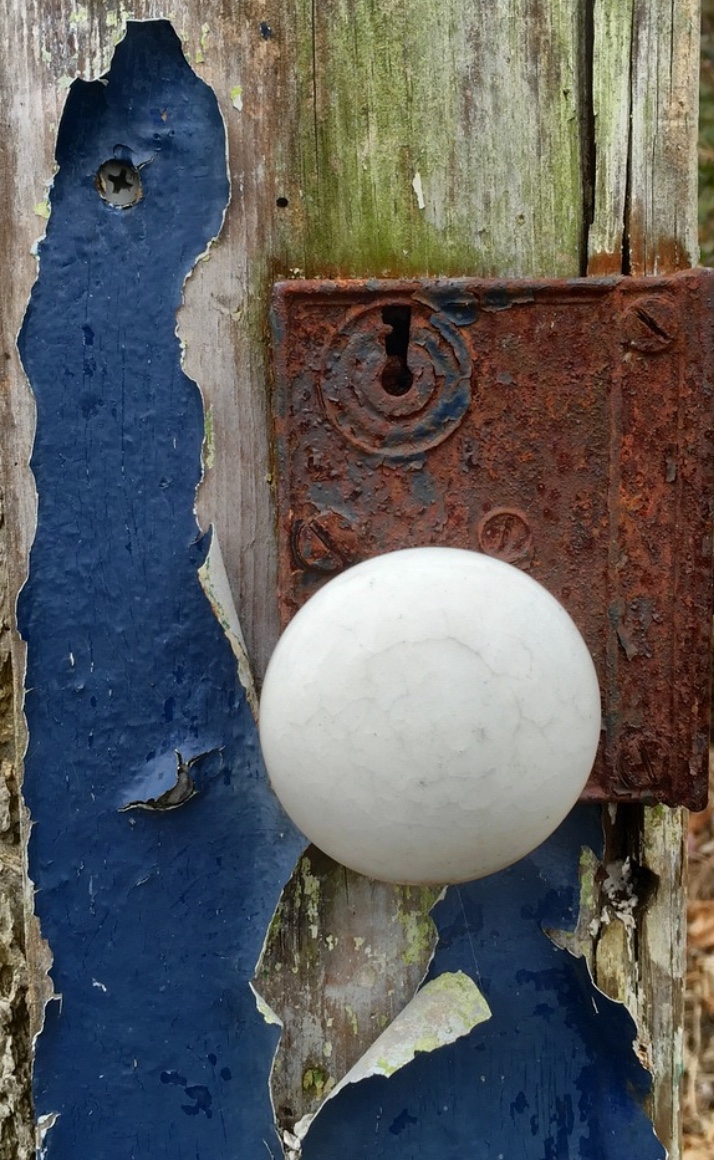
After the Madrigal’s family home is rebuilt (with the help of the family and the community uniting together), the family gives Mirabel the honor of turning the doorknob and opening the front door of their new home. They sing about finally seeing Mirabel shine (because she is no longer hidden in their shadows). And Mirabel says an important line in the movie that I always glossed over until I watched this movie again yesterday. When asked what Mirabel sees when handed the doorknob, she looks down at the glossy doorknob, sees her reflection, and states, “I see…me. All of me.” All of her – the good, the bad, the plain, the extraordinary. She sees she is human (she makes poor decisions and she makes good ones), but she still has equal value and worth in a family where she is loved – by herself and by her family.
In the real world, none of us are pure evil villains. None of us are flawlessly perfect saviors. We all have wounds from our pasts and we sometimes choose to vent our rage at others out of pain or fear, causing damage to others. We also have the ability to listen, attempt to understand, and treat others with the genuine love that covers over all sins. Watching Mirabel taught me that these are moment-by-moment choices each day.
One destroys. The other builds up.
Ultimately, the choice is ours.

 Wisdom from the Trenches
Leave a reply to Anuran & Sayoni Cancel reply