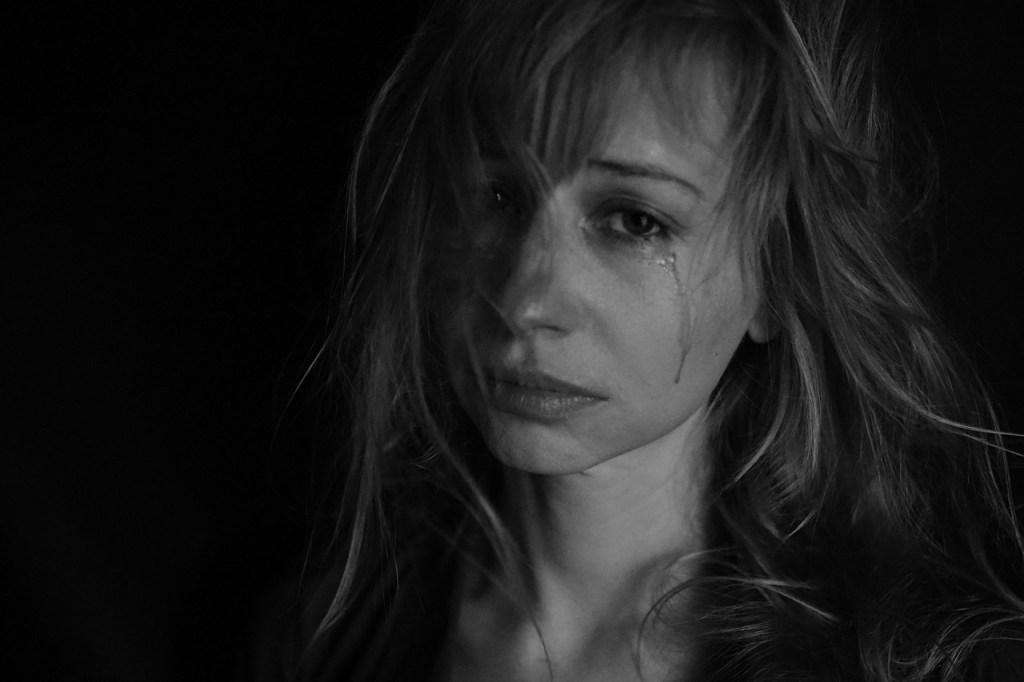
There is a part in a book by Lewis Carroll called “Alice’s Adventures in Wonderland” where the main character, Alice, is so distraught, she begins to cry. Her adventures have been too taxing, too bizarre, too isolating, too frightful, too difficult to bear that the tears well up in her eyes and spill over, splashing onto the ground. The only problem is that Alice begins to cry when her issues are too big to handle – and she is her biggest issue! She has grown to be the size of a giant, so her tears contain gallons of water and quickly flood the room, leaving her fighting just to survive in an open sea of emotion.
Yes, this is a children’s book. But doesn’t it poignantly capture the stages of grief? Alice gets angry with the weird and uncaring world she happens upon by chance, a world that seems oblivious to her pain and confusion and fear, a land where people and animals carry on as if everything were normal, when it most assuredly is not. Alice tries to negotiate her way out of Wonderland, but fails miserably and must continue to blunder her way through this strange, new place. Alice attempts to ignore what is around her, while everything screams for her attention. Alice sheds buckets and buckets of huge, crocodile tears out of frustration, anger, fear, and sadness. Alice is grieving the radical change in the world around her…and my experience in the aftermath of trauma mirrored her own.
After cycling through many emotions, there came a point after being attacked that I broke down and cried. I could not make sense of my world. All of my efforts seemed in vain and I fell into deep despair. I cried. I cried buckets of tears and I wished they would cleanse my soul. I wished all those tears would rid me of the immense burden of shame, self-loathing, and depression that I now carried. I wanted the tears to flood me and wash away the memories. While tears are scientifically known to be cleansing, what I was wishing for wasn’t realistic. My tears were not my savior.
So I lost hope and stopped crying. What is the point of bawling like a baby if it doesn’t change anything? Why sit on the floor and cry if it cannot turn back time? But here’s the deal: I can cinch off a hose, and the stream of water will stop flowing, but the water is still there – lurking, underneath the surface, building pressure. Likewise, I can force yourself to stop crying and suck it up, but the emotion is still there – lurking just under the surface, building pressure until something triggers it. Ignoring grief doesn’t cure it. Ignoring grief buries it where it can grow into crippling depression.
I learned over time that while tears will not wash me clean and are not my savior, tears are also not my enemy. There is a song by Simon and Garfunkel called The Sound of Silence that starts, “Hello darkness, my old friend. I’ve come to talk with you again.” The sadness that comes with grief taught me things about my experiences, my life, my values, and my world that I never could have otherwise known in any other way. Grief taught me compassion for others and true empathy. When I turned toward my hurt and sat with the darkness that descended upon me in the form of total despair, I learned some of life’s greatest lessons. The darkness that enveloped me did not do so to blind me, to frighten me, or to destroy me. When I listened to my grief, it spoke to me about deep and meaningful things that I would otherwise not understand.
In “Alice’s Adventures in Wonderland”, Alice sheds giant tears that flood the room that she is locked in. She thrashes around in a desperate situation, seeming to drown in a sea of sorrow. But the grief doesn’t well up within her and spill out to kill her. The grief spills out of her – and then carries her along, tossing and turning on the waves, until it deposits her on a beach, far from the little room she was originally trapped in. Expressing her sadness didn’t end her life…it began it. Sadness released her from the prison she could not escape and carried her to another place, a new place, a strange and beautiful place.
My sadness did the same.
What began for me as seemingly endless tears transported me to a completely new world, a strange and confusing version of the world I had known before, but also a bold and brilliant new land. Tears were teachers, when I learned to sit with the mess, listen, and let the emotion flow.
I’m not wishing sadness upon anyone and I’m not glorifying it. Sadness is difficult. Despair feels hopeless. Depression is torturous to bear. No one wants to permanently reside there, but it isn’t healthy to ignore the surroundings when you happen to be there. Overwhelming emotions aren’t meant to be avoided. Messy emotions should never be swept under the rug. These emotions exist because something very real happened – something we need to face and process when we are ready and able to do so. These emotions are there to help us grieve the loss of something or someone very dear to us – a process that cannot be rushed, deferred, or disregarded. If we could take a moment, as we have the strength to do so, and acknowledge the hurt, heartbreak, and hell of it all…this is when we begin to heal.
Denial never freed Alice and it won’t free me. Only by acknowledging and releasing genuine emotion will we move through this broken and beautiful, strange and scary, wonder of a land that we call Grief.
 Wisdom from the Trenches
Leave a comment