One of the most difficult aspects of depression is the lack of motivation or energy to take action on anything, whether routine or adventuresome. And then, there is the anxiety that slams me with overwhelming fear that it will all be a disaster and I’m better off – safer – not leaving my house. This is further complicated by the helplessness I felt when sexually assaulted. At the time, my “no” meant nothing. I would love to tell you that I’ve come to a place in my healing where this has disappeared and I no longer struggle with depression or fear, but that would be a lie. I still face a lack of motivation and seemingly insurmountable fear, especially every doggone time I try something new.
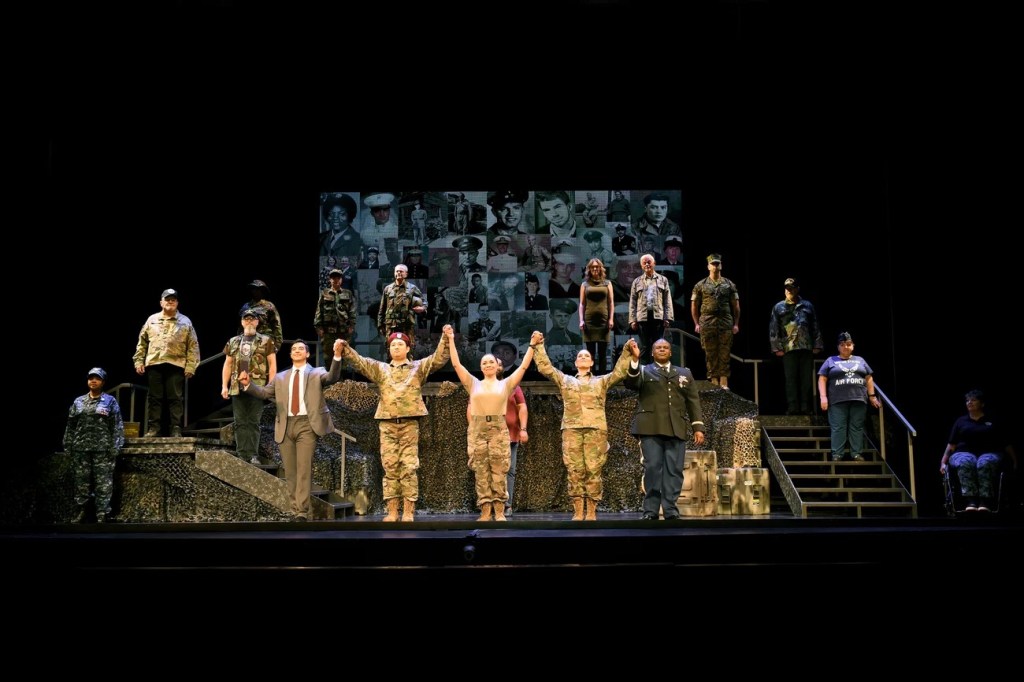
I never originally intended to be in the Army…or to homeschool my kids…to write a book…or to be in an opera. Some of the best life experiences I have pop up suddenly and just, well, happen. But that doesn’t mean that they don’t come with a massive struggle with self-doubt, a strong dose of anxiety, and the crippling belief that you’re making a grave mistake by choosing this. The trick is to master that fear, something I consistently work on doing. Why is it important for a victim to deal directly with anxiety? Beating fear allows victims to live a more fulfilling life and gives back the right to choose that was stripped from them when someone else committed a crime against their body, mind, and soul.
The night I attended the first meeting to learn more about the veteran choir the opera house was gathering to sing in the finale of “The Falling and the Rising”, a modern opera about the military, I cried for an hour, felt like I was going to vomit, talked myself out of going, almost turned around and drove home when I reached the parking lot, and just generally freaked out. But I did what I always do when confronted with a new adventure…I used my triple A strategy for managing my anxiety:
- ACKNOWLEDGE. Denying that something exists does not make it disappear. I’m an adult…a far cry from the child who believes I am hidden simply because I covered or closed my eyes. Feelings are real. Emotions exist. They actually affect me. They influence my behavior and choices. It does not give emotions more power to acknowledge their presence in my life. On the contrary, burying emotions or pretending they don’t exist most often makes emotions far worse than they actually are when they first surface. I think that living in denial is akin to driving my vehicle with my eyes shut: The engine is still moving me forward, I just no longer possess responsible control of my vehicle. It is an incredible sign of maturity to keep my eyes wide open to my reality so I am able to clearly choose where I am headed and to maintain control of how I get there.
- ASSESS. Again, I don’t bother asking myself if what I am feeling is “real”. Emotion is real. Emotion is legitimate. But emotion is not always applicable to the situation at hand. For this reason, I take a moment to really honestly assess why I feel anxious. I ask myself what is causing me to fear. If I am in a dangerous situation, my fight or flight system should kick in and I should begin to feel anxious. For my protection, I want this instinctual fear to remain a part of who I am. If the situation directly in front of me is creepy or actually warrants fear, I avoid it altogether, call in backup, or leave. But the vast majority of the time, what I face is mostly harmless. For instance, I’m headed to coffee with people I don’t know very well or I’m driving to a new place in an area of town I rarely visit. Misplaced anxiety rooted in past experiences, or just a generalized foreboding about a perfectly normal situation I am about to face, will hold me back in life – something I have decided I don’t want as a survivor of trauma. When all is well and fear threatens to victimize me once again, I fight back. These are the times I push through and move on to step three…
- ACT. Have you ever seen the funny movie “What About Bob?” Bob suffers from mental illnesses that keep him holed up in his apartment, with the exception of the occasional trip to see his psychiatrist. His psychiatrist advises Bob to begin taking “baby steps” to push past the fear. The movie is about the baby steps Bob takes into new and glorious adventures. Hilarity ensues as Bob changes his entire life as he pushes past his fears by methodically conquering mini goals he sets for himself, one by one. I follow the movie’s comedic advice and I form an action plan that involves tiny, actionable baby steps. Years ago, I was terribly afraid of taking a road trip. I told myself to just get in the car. When I was in the car, I told myself to just drive to the freeway. When I reached the freeway, I aimed for a Starbucks two hours down the road. When I reached that Starbucks, I aimed for another Starbucks just two hours down the road. And, before I knew it, my fear was gone and I encountered amazing sites and adventures as I drove – with just me and my young children – around the entirety of the Western United States! I achieved this (and many other things) by taking “baby steps”. At times it is painstakingly slow, but last I checked, slow progress is still forward progress.
In the case of participating in an opera, I sat in my car and cried that first night. I acknowledged that the fear was immense, but did not mean I was in danger. So I told myself to drive to the practice location. Just…drive. Once I got there, I panicked. But I acknowledged that I was scared and since I was not in danger, I told myself to just walk inside the building and see what it was all about. Well, once inside the building, I was greeted by a stunningly beautiful woman, who asked me to sign in and put me at ease with her contagious smile. I sat in the back of the room, uncomfortable and terrified. But I stayed through the meeting. I came back for the next, and the next, and the next…until we had practiced enough to walk on stage and perform in front of an audience. Was I terrified? Absolutely. But I knew I wasn’t in danger and by then, I had made friends with eleven of the most incredible veterans and the rest of the opera’s crew, so I was much more confident in confronting that anxiety. One step at a time, I challenged my anxiety and I ultimately came through victorious and with the most incredible memories!
Nelson Mandela once said, “Courage is not the absence of fear, but the triumph over it. The brave man is not he who does not feel afraid, but he who conquers that fear.” New adventures in life will almost always come with a fear of the unknown. To change your life and experience something new, you must conquer that fear. You have what it takes within you to face that fear head on and push past it to achieve what you envision for your life, or even to just try something new you had never imagined possible before. Those times where you are able to acknowledge the presence of anxiety in your life, honestly assess what is gnawing at you on the battlefield in your mind, and move forward in spite of that fear…that is brave and courageous living.
ACKNOWLEDGE. ASSESS. ACT. Whether the adventure is big or small, you have within you the power to say no to what isn’t serving you anymore, and you can choose to embrace a willingness to say yes to things that bring you a fulfilling and beautiful life. This is how we conquer fear.
 Wisdom from the Trenches
Leave a comment