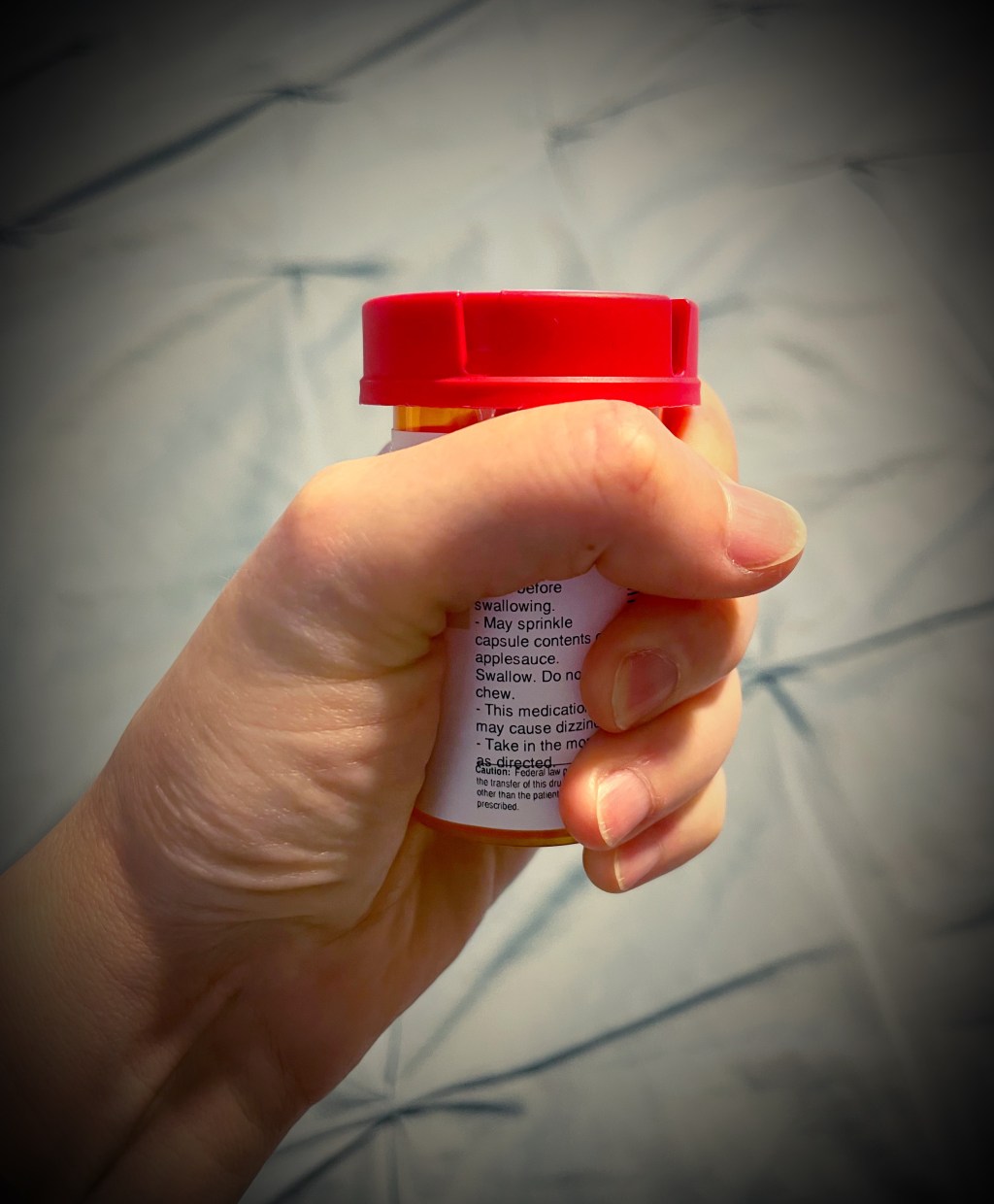
Of all the things I have experienced, the bottomless pit of unsolicited advice has been one of the most devastating to my mental health. In most cases, the advice I received from well-intentioned individuals (who aren’t doctors or, if they are, aren’t MY doctor) almost always hindered my progress on my journey toward wellness and healing. All unsolicited advice was unwittingly delivered as if I wasn’t doing enough in the kitchen, at the gym, or didn’t have enough faith in God to overcome the battle set before me. This only perpetuates the stigma against getting professional help for mental health. It communicates to individuals who are in a desperate situation that they are weak, crazy, or faithless by trivializing their symptoms and offering surface-level solutions for far deeper issues. “If they only tried harder…” is a devastating thing to say to someone who needs to expend all their energy just to get out of bed and shower.
It can be said that depression is like swimming upstream while everyone else walks with ease on the banks alongside the river. Those on the banks progress so quickly because nothing holds them back, but the person struggling in the water has to exert way more energy to obtain less forward movement as a result. There are points where the person battling depression, just like someone swimming upstream, is exhausted and it is all they can do to simply keep their head above water. In those moments, they lose precious evidence of progress as circumstances beyond their control pull them down. Those who walk along the banks can’t understand why the swimmer isn’t making more progress. What is easy for them is rapidly depleting the person swimming against the current in the river. Correct treatment for depression levels the playing field. It pulls the fatigued swimmer from the water and places their feet firmly on ground. It allows them to walk, unrestrained, just as others have been doing. For those who have thrashed about and struggled for a great deal of time, it can be quite relieving to be free of the fear of metaphorically drowning in one’s emotions.
But seeking help for any mental health condition to level the playing field and create a safe space for the patient is often actively shamed in society. It boggles my mind that some medical remedies and treatments are praised for their contributions to our world, while others are vilified. Who decides what medications are good and which medications are evil? I want to meet this person. Who decides which disorders or ailments count as legitimate medical conditions and which ones don’t? I want to meet this person! Who determines which organs are approved to save through the use of medication and which organs need no outside assistance? I want to meet this person – because their logic is inherently flawed. ALL medications developed in this world have benefits and side effects. ALL medical conditions are legitimate and deserve attention from medical professionals. ALL organs are important to the proper functioning of our bodies…with the exception of the appendix and gall bladder. You can survive just fine without those two.
If I could draw a correlation for a moment, think about diabetes: Type I diabetics are insulin-dependent. For whatever reason, their body simply is not manufacturing what they need to properly function. Without their medication, they will die. Type II diabetics can sometimes make diet and exercise changes to manage or eliminate their diabetes but sometimes it simply isn’t enough. Medication is also a reasonable option for Type II diabetics, sometimes temporarily. And then, there is gestational diabetes. Some women experience symptoms of diabetes during pregnancy. They must carefully monitor their diet, their blood sugar levels, and the size of the baby growing inside them during the course of their pregnancy. Oftentimes, gestational diabetes goes away once the baby is born.
If a random woman were to confess to me that she is diabetic and uses medication to manage her condition, I would not jump to regale her with information about diet changes that are healthier to manage her condition. Why? Because I don’t know what type of diabetic she is! I would look like a fool if I launched into a lecture about the benefits of an organic, whole foods diet for diabetics if she were insulin-dependent. She might politely smile and nod, but it doesn’t change the fact that I am not a doctor – I’m certainly not her doctor – so I don’t know the entire situation and I’m in no position to recommend solutions to her. When it comes to depression, we should have the same mindset.
Depression is not one size fits all! Depression is similar to diabetes in that there is more than one type of depression. Depression comes in many forms, often stemming from a variety of underlying causes, manifests in various ways, and, therefore, requires an educated and empathetic approach to treatment. In other words, Joe Shmoe doesn’t know the answer to Debbie Downer’s case of the blues.
Depression greatly affects the brain, which is an actual, physical (and incredibly intricate) organ in the human body. It shocks me that I have to say this! It angers me that society accepts medical treatment for physical ailments as necessary, but fails to acknowledge that the brain is a very real part of our body and depression is, therefore, a very real physical ailment. With an organ as complex as the brain, there isn’t always a simple solution, or only one solution! The hypocrisy when it comes to seeking medical treatment is astounding…and this opposition to certain treatments has been devastating.
Now, I’m not a doctor, but I’d like to break depression down into three categories (a massive oversimplification) to show the similarities between depression and diabetes for one purpose: to challenge society’s stigma against seeking treatment for mental health issues. It is important to note that these are not technical or clinical terms and cannot be used for the purpose of medical diagnosis or treatment. I’m writing to present a point that if it is acceptable to seek treatment for a medical condition (such as diabetes), it should be equally acceptable to seek treatment for another medical condition, such as depression. Here we go…
- Permanent Depression – This is basically the “Type 1” category of depression that many aren’t aware actually exist. This type of depression is characterized by extended severe symptoms due to low levels of dopamine and/or serotonin in the brain. In many cases, this is caused by a specific genetic mutation of the COMT gene that causes a malfunction in the hippocampus, resulting in overactivity that sucks up all the dopamine in your brain. The brain cannot properly function without correct hormone levels and with a reduced amount of neurotransmitters. Enter severe depression while the brain struggles to operate in basically a hormone desert of doom. This is a medical breakdown in an organ that results in severe and clinical depression and can be diagnosed thru a simple genetics test, to see if the patient possesses the gene modification. While I absolutely believe it is entirely possible for God to heal every person in the roughly 30% of the European-descendant population who possess this specific genetic modification, I think it’s safe to say that like any other medical condition (like Down’s Syndrome or high blood pressure or diabetes or even near sightedness), there are many times when He doesn’t heal this medical condition. To put it in simple terms: if this depressed individual’s brain were a car, it would be coasting forward, but the check engine light would be blinking furiously and the gas tank would contain only fumes because it has a crack the size of the Grand Canyon in it and leaks everything you put in it right onto the ground. Unless you replace the tank, no amount of gas will keep that car going for very long. Your car needs major structural work done, my friend. BUT, with a lack of miraculous intervention, humans are left to address the problem as best we can – and we have not yet identified a way to structurally fix this genetic modification, so we must rely on temporary fixes to close the gap. I’m talking about medication. Without it, like a Type I diabetic, this type of depressed individual might not survive. I am not being dramatic here. Severe and long lasting depression, with very little hope for a brighter future, often leads individuals to suicide. The brain is the central operating computer for our entire body. Depriving it of appropriate levels of necessary hormones or chemicals can lead to difficulty thinking, hallucinations, coma, and even death. For this reason, just as you would never recommend a Type I diabetic wean off of insulin, you should never recommend a clinically depressed individual go off of anti-depressants. Ever.
- Acute Depression – This is kind of a “Type II” depression, if you will, that settles in and is largely based on the overall health condition of the person, their general diet, and their current phase of life. My ingenious friend, who worked in the medical field for quite some time, loves to say, “We are all just walking chemistry sets.” And she’s right. Acute depression can be triggered by difficult life circumstances which erode at self-care, resulting in internal imbalances that mess with emotion. This type of depression is different from permanent depression in one way: this type of depression can sometimes be eliminated through healthy life choices. Those experiencing this type of depression often find relief when they stop drinking or smoking, when they eat healthy, when they cut sugar from their diet, and/or when they incorporate daily exercise into their routine. By paying attention to their overall wellbeing, whatever is causing the imbalance within them that is triggering depression is resolved. Homeostasis returns to the body. Depression abates. It’s a beautiful thing that requires just one thing from the patient: motivation. However, sometimes, the motivation to implement these life changes is difficult to find when one doesn’t feel well, so medication and counseling are often used to kickstart the process and the patient can be weaned off both when the life changes are firmly in place. In this situation, if the patient’s mind is a car, perhaps they are experiencing sluggish acceleration and their engine needs a bit of a tune up before all is well, if you know what I mean.
- Prenatal and Post-partum Depression – These types of depression are measured on a scale from “Baby Blues” to EXTREME. Post-partum depression, just like gestational diabetes, is situational in nature. This depression is due to circumstances that temporarily cause hormone imbalance. With this depression, treatment is necessary, but not always forever. There is a light at the end of the tunnel, so to speak. The darkness won’t last for all eternity and several baby-safe treatments can help mothers weather this difficult time. Often, the diet is already healthy, moderate exercise is already occurring, and regular doctor visits are scheduled because the mom-to-be wants to be in the best possible shape to grow a healthy baby. But that’s simply not enough sometimes and intervention must happen to keep mom safe and baby thriving. Seeking treatment for depression during or after pregnancy is not weakness, nor is it failure. If this patient’s mind is a car, they just experienced a flat tire but their trunk has no spare…so they need a little assistance to get on their way once again.
And so, it comes down to this: Like diabetes, depression is an internal (and largely invisible) struggle. We know diabetes is real…and so is depression. We acknowledge that diabetes is damaging to one’s health and can be threatening to one’s life, as can depression and suicide. We leave it to medical professionals to correctly diagnose diabetes and suggest appropriate treatment. Why don’t we do the same when it comes to mental health? In order to not further exacerbate the problem, we should avoid doling out medical advice to others…regardless of the medical condition they face.
 Wisdom from the Trenches
Leave a comment